TL;DR:
- A Health Savings Account is generally the better long-term choice when eligible, due to its portability, investment options, and triple tax advantage. An FSA may be practical if your employer does not offer an HDHP or if you need immediate access to predictable medical expenses within the current plan year.
If you have access to an HSA-eligible High-Deductible Health Plan, the HSA is almost always the stronger long-term choice. It travels with you when you change jobs, it can be invested, and it carries a triple tax advantage that no FSA can match. If your employer does not offer an HDHP, or if you have predictable medical costs you need covered immediately this plan year, an FSA is the practical answer.
- Choose an HSA when you want portable, investable, long-term tax-advantaged savings and you qualify under an HDHP. The individual and family coverage limits for 2026 are set by IRS guidance, per IRS guidance in Publication 969.
- Choose an FSA when your employer does not offer an HDHP, you have predictable near-term medical costs, or you want immediate access to your full annual election from day one.
Pro Tip: For HSAs, save every medical receipt even when you pay out of pocket. You can reimburse yourself years later, letting your balance stay invested and compound tax-free in the meantime.
Table of Contents
- What is an HSA and what is an FSA?
- HSA vs FSA: the key differences at a glance
- Who qualifies, and what are the 2026 limits?
- How you can use the money: qualified expenses and timing
- Tax treatment and the HSA triple-tax advantage
- Can you have both? Limited-purpose FSAs and coordination rules
- A short checklist to help you choose between HSA and FSA
- How to open and manage an HSA or FSA
- Worked examples: which account saves more under two spending profiles?
- Key Takeaways
- The account that gets overlooked most often
- Try the Apexapro HSA vs FSA calculator
- Where to check official rules and additional reading
What is an HSA and what is an FSA?
An HSA (Health Savings Account) is an account you own. You open it yourself, contributions roll over indefinitely, and it stays with you if you change employers. The catch: you must be enrolled in an HSA-eligible HDHP and cannot be covered by Medicare or claimed as someone else's tax dependent.
An FSA (Flexible Spending Account) is an employer-sponsored benefit, not a personal account. Your employer controls the plan structure, and the funds generally do not follow you when you leave. Most employer-offered health plans, including non-HDHP plans, can pair with an FSA.
The sharpest difference between the two accounts: An HSA is yours permanently, rolls over every year with no limit, and can be invested. An FSA is a use-it-or-lose-it employer benefit with capped rollover options and no investment component. Eligibility rules, not personal preference, often make the decision for you.
HSA vs FSA: the key differences at a glance
The table below captures the dimensions that matter most when comparing these two accounts.
| Dimension | HSA | FSA |
|---|---|---|
| Eligibility | Must have an HSA-eligible HDHP | Any employer-sponsored health plan |
| 2026 contribution limit | $4,400 (individual) or $8,750 (family) | $3,400 per person |
| Catch-up (age 55+) | $1,000 additional | Not available |
| Tax treatment | Triple tax advantage | Pre-tax contributions only |
| Access to funds | Only what you have contributed so far | Full annual election available day one |
| Portability | Fully portable; you own it | Stays with employer |
| Rollover | Unlimited; balance never expires | Limited carryover or grace period |
| Investment options | Yes, once balance threshold is met | No |
| Withdrawals (non-qualified) | Penalty + income tax before 65; income tax only after 65 | Forfeited if unused |
| Best for | Long-term savers, job-changers, investors | Predictable near-term medical costs |
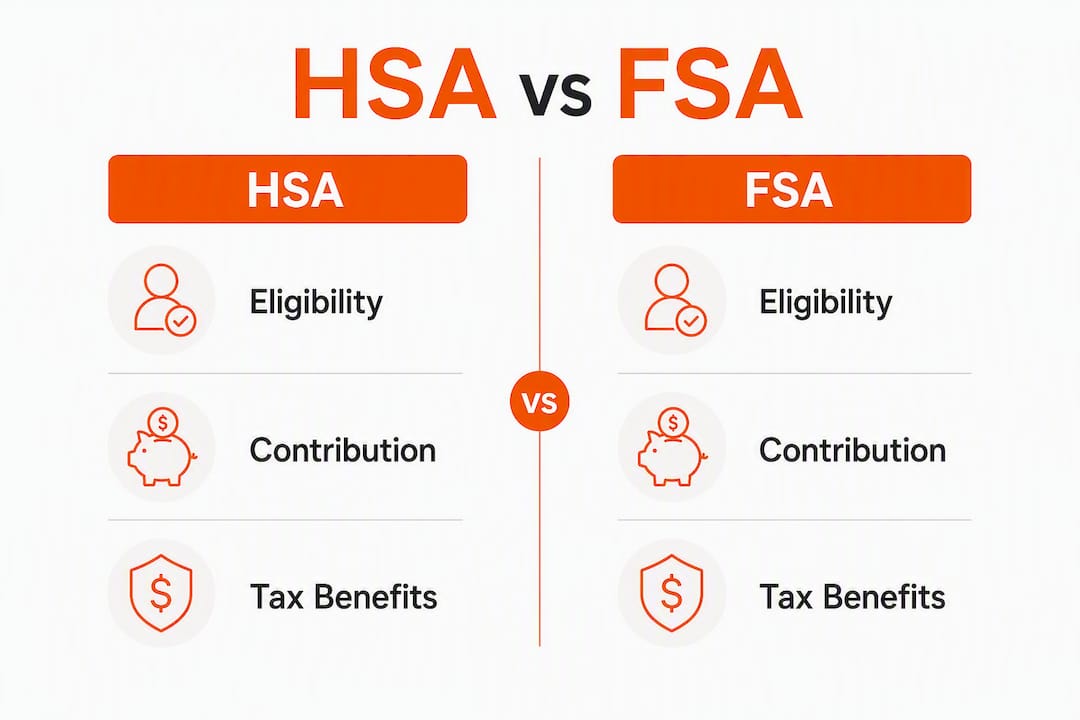
A few points stand out in this HSA vs FSA comparison. The FSA's "full-year access from day one" feature genuinely helps people with predictable January expenses, like glasses or a scheduled procedure. The HSA's unlimited rollover and investment potential, however, make it a fundamentally different financial instrument over a decade or more.
Who qualifies, and what are the 2026 limits?
HSA eligibility requirements
To contribute to an HSA, you must meet all four conditions: enrolled in an HSA-eligible HDHP, not enrolled in Medicare, not covered by a non-HDHP health plan (including a spouse's general-purpose FSA), and not claimed as a dependent on someone else's tax return. Recent IRS guidance has allowed certain telehealth-only coverage and some ACA bronze plans to remain compatible, but you should confirm your specific plan's status with your HR department.

FSA eligibility
FSAs are employer-offered benefits. Self-employed individuals cannot open an employer-sponsored healthcare FSA. Dependent-care FSAs follow separate rules and are not the same as healthcare FSAs; the limits and qualified expenses differ significantly.
2026 numeric thresholds
The IRS sets HDHP and contribution thresholds annually. For 2026:
| Account / Threshold | Individual | Family |
|---|---|---|
| HSA contribution limit | $4,400 | $8,750 |
| HSA catch-up (age 55+) | +$1,000 | +$1,000 per eligible spouse |
| FSA contribution limit | $3,400 | $3,400 per person |
| HDHP minimum deductible | $1,700 | $3,400 |
| HDHP max out-of-pocket | $8,500 | $17,000 |
Your employer may set lower FSA limits than the IRS maximum. Always confirm the actual ceiling in your plan documents before your open enrollment election.
How you can use the money: qualified expenses and timing
Both accounts cover a broad range of IRS-qualified medical expenses including doctor visits, prescriptions, dental care, vision care, and many over-the-counter items. The full list lives in IRS Publication 502, and it is longer than most people expect — hearing aids, acupuncture, and certain home medical equipment all qualify.
The timing difference is where the two accounts diverge sharply in practice.
- FSA: Your full annual election is typically available on the first day of the plan year. If you elect $2,000 and your plan starts January 1, you can spend all $2,000 in January even though payroll deductions haven't caught up yet.
- HSA: You can only spend what has actually been deposited. If you've contributed $500 so far this year, that's your spending limit today — though you can reimburse yourself retroactively once more funds arrive, provided you kept the receipt.
- Qualified expense categories: Medical, dental, vision, prescriptions, OTC medications (no prescription required since 2020), menstrual care products, and certain insurance premiums after age 65.
- Reimbursement mechanics: FSA administrators typically require receipts or an Explanation of Benefits. HSA reimbursements are self-directed; the IRS expects you to keep documentation in case of audit.
Pro Tip: If you can afford to pay medical bills out of pocket, do it and save the receipts. Your HSA balance stays invested, and you can reimburse yourself any time in the future — there is no deadline for HSA reimbursements on past qualified expenses.

Tax treatment and the HSA triple-tax advantage
The HSA's tax structure is genuinely unusual among U.S. savings vehicles. Contributions are tax-deductible (or pre-tax via payroll), the balance grows tax-free when invested, and withdrawals for qualified medical expenses are also tax-free. No federal income tax touches the money at any stage, which is why the triple tax advantage label is accurate, not marketing language.
An FSA delivers only the first layer: pre-tax payroll contributions lower your taxable income for the year. There is no investment growth, and unused funds are forfeited (subject to the employer's carryover or grace period election). For someone in the 22% federal bracket contributing the 2026 FSA maximum of $3,400, the tax savings amount to roughly $748 — meaningful, but a fraction of what a fully invested HSA can accumulate over 20 years.
Investment options in HSAs
Most HSA custodians (Fidelity, HSA Bank, HealthEquity, and others) allow you to invest your balance in mutual funds or ETFs once your cash balance exceeds a threshold, often $500–$1,000. The investment menu and fee structure vary considerably by provider. Watch for:
- Account maintenance fees: Some custodians charge $2–$5 per month unless you maintain a minimum balance.
- Investment minimums: A few providers require $2,000 or more in cash before you can invest.
- Fund expense ratios: Low-cost index funds (Vanguard, Fidelity zero-expense funds) preserve more of the compounding benefit than actively managed options.
Pro Tip: When comparing HSA providers, the fee structure matters as much as the investment menu. A $36 annual maintenance fee on a $1,000 balance is a 3.6% drag before any market return.
Can you have both? Limited-purpose FSAs and coordination rules
The IRS generally prohibits contributing to a general-purpose healthcare FSA while also contributing to an HSA. The two accounts conflict because a general FSA can pay for expenses before you meet your HDHP deductible, which disqualifies you from HSA contributions.
The practical workaround is the Limited-Purpose FSA (LPFSA). An LPFSA covers only dental and vision expenses, leaving your HDHP deductible intact and your HSA eligibility unaffected. Some employers offer this combination deliberately to let employees maximize both tax-advantaged accounts for different expense categories.
On the FSA carryover question: employers may allow either a carryover amount or a 2.5-month grace period, but not both simultaneously. The carryover amount is set by the IRS each year; the grace period gives you until March 15 of the following year to spend the prior year's balance.
Before open enrollment, ask your HR department two specific questions: Does the plan offer an LPFSA alongside the HSA option? And does the FSA use a carryover or a grace period? The answers will materially change how you allocate your election.
A short checklist to help you choose between HSA and FSA
Work through these steps in order. Most people reach a clear answer by step three.
- Check your HDHP eligibility. If your employer does not offer an HSA-eligible HDHP, an HSA is off the table. Enroll in the FSA and move on.
- Estimate your predictable annual medical costs. Add up recurring prescriptions, scheduled procedures, and typical copays. If the total is high and predictable, the FSA's upfront access is valuable.
- Weigh long-term savings vs. immediate access. If you are generally healthy, can cover out-of-pocket costs while your HSA grows, and plan to stay employed for several years, the HSA's compounding advantage is significant.
- Factor in employer contributions. Some employers contribute $500–$1,500 to employee HSAs annually. That free money shifts the math decisively toward the HSA.
- Consider your job mobility and retirement timeline. The HSA's portability matters if you change jobs frequently. After age 65, HSA funds can be withdrawn for any purpose (not just medical) with ordinary income tax but no penalty, making it function like a traditional IRA.
Considerations by personal situation
- Chronic conditions or high annual costs: The FSA's full-year access and lower HDHP deductible exposure may reduce financial stress.
- Age 55+ and HSA-eligible: The $1,000 catch-up contribution is a meaningful bonus; prioritize maximizing it.
- Family coverage: The $8,750 family HSA limit creates substantial tax-sheltered savings capacity over time.
- Recent job change: Confirm whether your new employer's plan year has started and whether you are mid-year eligible for HSA contributions.
Questions to ask your HR department
- Does the HDHP qualify as HSA-eligible under IRS rules?
- Does the employer contribute to the HSA, and when are those funds deposited?
- Is an LPFSA available alongside the HSA?
- Does the FSA use a carryover or a grace period, and what is the carryover amount?
How to open and manage an HSA or FSA
Getting the account set up correctly during open enrollment prevents most of the common problems people run into mid-year.
- Verify eligibility first. Confirm your health plan is HSA-eligible at healthcare.gov or with your insurer before electing contributions.
- Compare HSA custodians. If your employer does not designate one, you can open an HSA with any IRS-approved custodian. Compare fees, investment options, and debit card features before choosing.
- Set your election carefully. For FSAs, estimate conservatively — unused funds are forfeited. For HSAs, you can adjust contributions mid-year if your circumstances change.
- Automate payroll deductions. Pre-tax payroll contributions are more tax-efficient than after-tax contributions you later deduct on your return, because they also avoid FICA taxes.
- Track receipts and expenses. Use a dedicated folder (physical or digital) for every qualified expense receipt. For HSAs, there is no deadline to submit a reimbursement, so receipts from 2026 can be claimed in 2031 if you choose.
- Set up investments. Once your HSA cash balance clears the provider's threshold, move excess funds into low-cost index funds. Leaving a large balance in cash is the most common HSA mistake.
- Confirm the claims process. FSA administrators vary in how they substantiate claims — some accept debit card swipes automatically; others require manual receipt submission within 30–90 days.
Worked examples: which account saves more under two spending profiles?
Assumptions
| Variable | Example A (low spender) | Example B (moderate spender) |
|---|---|---|
| Federal tax bracket | 22% | 22% |
| Annual medical spending | $800 | $2,800 |
| HSA contribution (individual) | $4,400 | $4,400 |
| FSA contribution | $3,400 | $2,800 |
| Employer HSA contribution | $500 | $500 |
| HDHP premium vs PPO premium difference | meaningful tax savings | meaningful tax savings |
Example A — Low annual spending ($800): With an HSA, you contribute $4,400 pre-tax, spend $800 on qualified expenses, and carry $3,600 forward into investments (plus the $500 employer contribution). The 22% tax savings on $4,400 equals $968, and the invested balance compounds tax-free. With an FSA, you would elect $800, save $176 in taxes, and end the year at zero. The HSA advantage here is substantial over any multi-year horizon.
Example B — Moderate predictable spending ($2,800): The FSA's upfront access matters more here, especially if those costs hit early in the year. The HSA still wins on tax efficiency and year-end balance ($1,600 carried forward plus employer funds), but the gap narrows. If the HDHP premium savings are smaller than the PPO alternative, run the numbers carefully before assuming the HSA is better.
These examples use 2026 IRS limits and simplified assumptions. Investment returns, variable premiums, and state tax treatment all affect the real outcome. For a personalized comparison, plug your own numbers into the Apexapro interactive calculator to see which account comes out ahead under your specific spending profile.
Key Takeaways
An HSA beats an FSA on long-term value for eligible individuals, but the FSA remains the only option when an HDHP is not available or when immediate full-year access to funds is the priority.
| Point | Details |
|---|---|
| HSA requires an HDHP | You must be enrolled in an HSA-eligible plan with a 2026 minimum deductible of $1,700 (individual). |
| 2026 contribution limits differ | HSA allows up to $4,400 (individual) or $8,750 (family); FSA caps at $3,400 per person. |
| HSA triple tax advantage | Contributions, growth, and qualified withdrawals are all tax-free — FSA covers only the first layer. |
| FSA use-it-or-lose-it risk | Unused FSA funds are forfeited unless your employer offers a carryover or grace period. |
| Apexapro calculator | Use the free Apexapro tool to compare your own premiums, tax bracket, and spending for a personalized result. |
The account that gets overlooked most often
Most articles frame this as a simple either/or, but the more interesting question is why so many HSA-eligible employees leave their balance sitting in cash. The triple tax advantage only materializes when the money is invested. A $4,400 HSA contribution left in a savings-rate cash account for 20 years is a missed opportunity that dwarfs the annual tax deduction.
The FSA's use-it-or-lose-it feature gets most of the criticism, but the real behavioral trap in HSAs is inertia. People open the account, get the debit card, and never touch the investment settings. Employers and custodians share responsibility for that outcome, but the individual pays the price.
For most healthy, working-age adults with access to an HDHP, the right move is to maximize the HSA, invest the balance beyond a small cash buffer, and treat it as a second retirement account with a medical-expense superpower. The FSA is a solid tool for a specific situation: predictable near-term costs, no HDHP access, or a plan year where you need that upfront funding. Knowing which situation you are actually in is the whole game.
Try the Apexapro HSA vs FSA calculator
The worked examples above use fixed assumptions that may not match your situation. Your actual premium difference, employer contribution, state tax rate, and expected medical spending all shift the outcome.
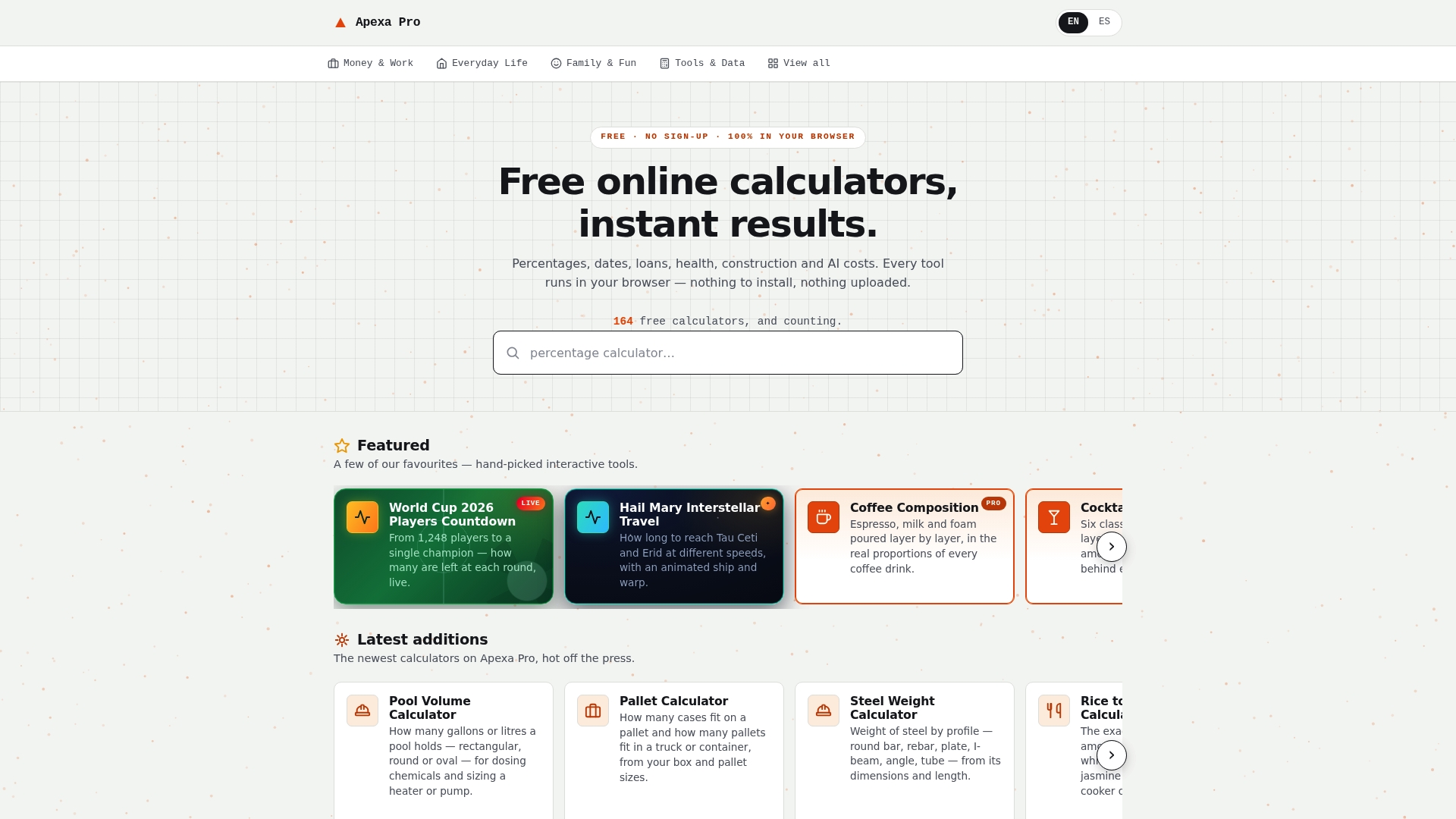
Apexapro's free, browser-based calculator lets you enter your own numbers — tax bracket, annual medical costs, HDHP premium savings, and employer contributions — and see the projected year-end balance and tax savings for both accounts side by side. No sign-up, no download, and no waiting. Head to Apexapro and run your own comparison in under two minutes. These results are illustrative; confirm your final election with your plan documents or a tax professional for complex situations.
Where to check official rules and additional reading
Always verify contribution limits and eligibility rules directly with the IRS and your plan documents before open enrollment. Numbers change annually.
- IRS Publication 969 — the authoritative source for HSA, FSA, HRA, and MSA rules, updated each tax year.
- IRS Publication 502 — the complete list of qualified medical expenses for both HSAs and FSAs.
- IRS Form 8889 — the tax form used to report HSA contributions and distributions; useful for understanding the tax mechanics.
- Healthcare.gov HDHP explainer — plain-language overview of how HDHPs and HSAs work together.
- Vanguard FSA vs HSA article — strong industry explainer covering investment strategy and long-term compounding.
- Fidelity HSA vs FSA learning center — practical guidance on carryover rules and account management.
- Your employer's Summary Plan Description (SPD) — the definitive document for your specific FSA carryover amount, grace period, and LPFSA availability.
This article is general information, not tax or financial advice. Confirm current IRS limits and your plan's specific rules with your HR department or a qualified tax professional before making your open enrollment election.