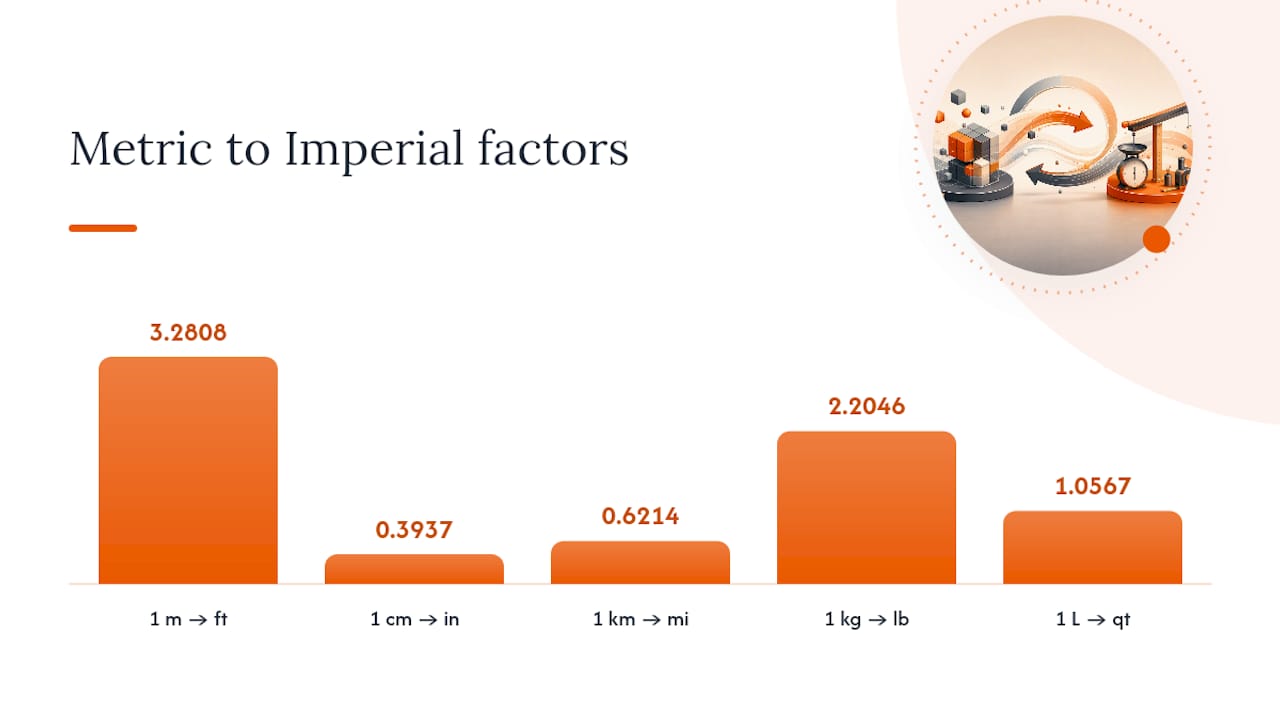
The fastest way to convert metric to imperial is to multiply by the right factor. For length, multiply meters by 3.2808 to get feet. For weight, multiply kilograms by 2.2046 to get pounds. For volume, multiply liters by 1.0567 to get liquid quarts. For temperature, the formula is °C × 1.8 + 32 = °F. Those five operations cover the vast majority of everyday conversions.
The exact factors below come directly from NIST's conversion appendix, the authoritative source for scientific and legal use in the United States:
- 1 meter = 3.2808 feet
- 1 kilogram = 2.2046 pounds
- 1 liter = 1.0567 liquid quarts
- 1 centimeter = 0.3937 inches
- 1 kilometer = 0.6214 miles
- 1 gram = 0.0353 ounces
- Temperature: °C × 1.8 + 32 = °F (reverse: (°F − 32) ÷ 1.8 = °C)
If you want instant results without doing the math yourself, the free Apexapro interactive converter handles all of these in seconds, no signup needed.
Key Takeaways
Accurate metric to imperial conversion comes down to using exact NIST factors for precision work and rounded values for everyday tasks, with a reliable tool or formula set always within reach.
| Point | Details |
|---|---|
| Core exact factors | 1 m = 3.2808 ft; 1 kg = 2.2046 lb; 1 L = 1.0567 qt (NIST-sourced). |
| Temperature formula | °C × 1.8 + 32 = °F; reverse with (°F − 32) ÷ 1.8 = °C. |
| Rounding by context | Use full NIST factors for science; round to 2 significant digits for cooking; nearest 1/8 inch for construction. |
| Spreadsheet shortcut | Paste =A2*3.2808 (m→ft) or =(A2*1.8)+32 (°C→°F) into Excel or Google Sheets for instant batch conversions. |
| Recommended tool | Apexapro's free browser converter handles all unit types instantly, no signup required. |
Table of Contents
- Metric to imperial conversion: formulas and worked examples
- Printable quick-reference conversion charts
- How to convert using a calculator, spreadsheet, or free online tool
- When to use exact vs. approximate conversions
- Why metric and imperial work so differently
- The free Apexapro conversion tools are worth bookmarking
- Sources
Metric to imperial conversion: formulas and worked examples
The core method is simple: identify your unit, find the correct factor, then multiply (metric → imperial) or divide (imperial → metric). Here is how that plays out across the four main categories.
Length
Formula: meters × 3.2808 = feet | feet ÷ 3.2808 = meters
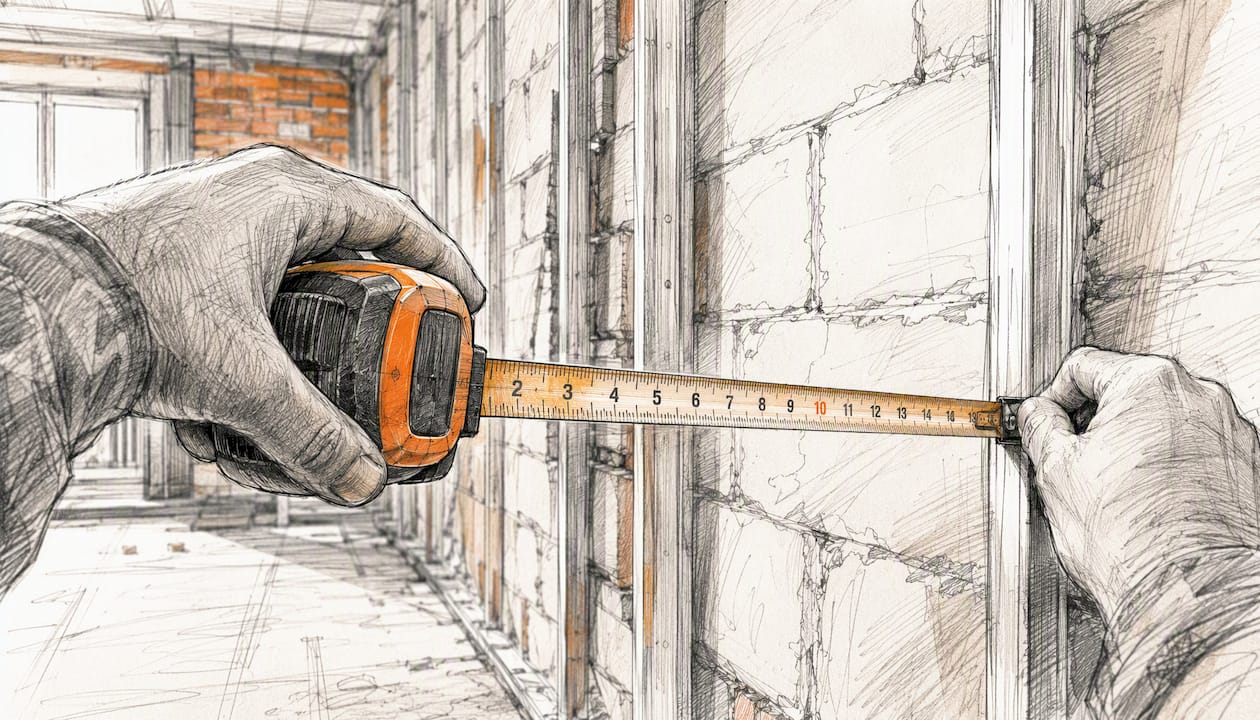
Worked example — construction: You have a room that measures 4.5 meters across. Multiply 4.5 × 3.2808 = 14.76 feet. Round to 14 feet 9 inches for a tape measure.
For centimeters to inches, multiply by 0.3937. A 30 cm ruler is 30 × 0.3937 = 11.81 inches, or just under a foot.
Mass and weight
Formula: kilograms × 2.2046 = pounds | pounds ÷ 2.2046 = kilograms
Worked example: A bag of flour weighs 2 kg. Multiply 2 × 2.2046 = 4.41 pounds. For grams to ounces, multiply by 0.0353 — so 250 g of butter is 250 × 0.0353 = 8.82 oz.
Volume
Formula: liters × 1.0567 = liquid quarts | milliliters × 0.0338 = fluid ounces
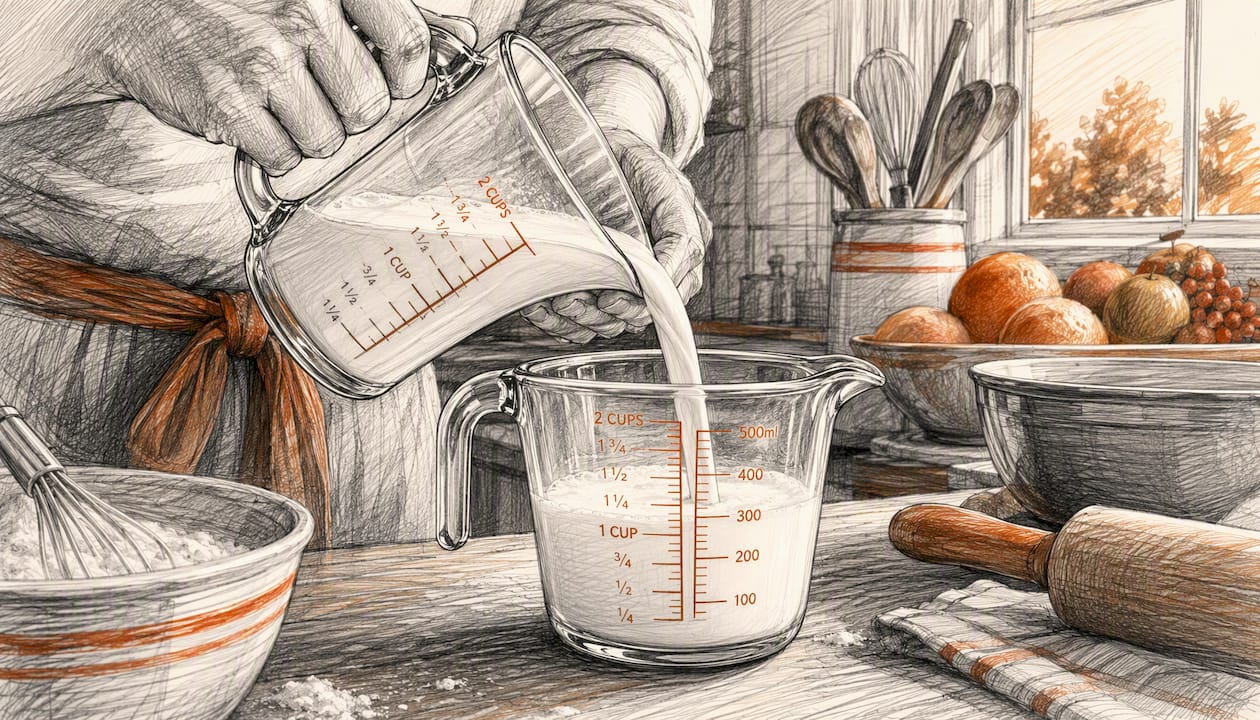
Worked example — cooking: A recipe calls for 240 mL of milk. Multiply 240 × 0.00423 = 1.015 cups (essentially 1 cup). The milliliters-to-cups conversion is one of the most-searched cooking conversions because cup sizes vary slightly by country, so using mL as the base keeps recipes consistent.
Temperature
The formula works in both directions:
- Celsius to Fahrenheit: °C × 1.8 + 32 = °F
- Fahrenheit to Celsius: (°F − 32) ÷ 1.8 = °C
Example 1 (metric → imperial): 100°C (boiling water) → 100 × 1.8 + 32 = 212°F
Example 2 (imperial → metric): 350°F (oven temperature) → (350 − 32) ÷ 1.8 = 176.7°C
For a deeper look at oven-specific temperature conversions, the oven temperature conversion chart covers Fahrenheit, Celsius, Gas Mark, and fan settings in one place.
How unit prefixes change the factor
Metric prefixes scale everything by powers of 10, which means you often need to convert within the metric system before applying an imperial factor.
- kilo- = 1,000 base units (1 km = 1,000 m)
- centi- = 0.01 base units (1 cm = 0.01 m)
- milli- = 0.001 base units (1 mL = 0.001 L)
So to convert 5 km to feet: first convert to meters (5 × 1,000 = 5,000 m), then multiply by 3.2808 = 16,404 feet. Skipping that intermediate step is the most common manual conversion error.
| Metric unit | Imperial unit | Multiply by |
|---|---|---|
| 1 meter (m) | feet (ft) | 3.2808 |
| 1 centimeter (cm) | inches (in) | 0.3937 |
| 1 kilometer (km) | miles (mi) | 0.6214 |
| 1 kilogram (kg) | pounds (lb) | 2.2046 |
| 1 gram (g) | ounces (oz) | 0.0353 |
| 1 liter (L) | liquid quarts (qt) | 1.0567 |
| 1 milliliter (mL) | fluid ounces (fl oz) | 0.0338 |
Printable quick-reference conversion charts
The table below lists the most-used unit pairs with both exact NIST factors and practical rounded values. NIST's approximate conversions page (SP 365) is the source for the rounded column — it is designed specifically for everyday use and classroom reference.
| Conversion | Exact factor (NIST) | Rounded (everyday) |
|---|---|---|
| 1 m → feet | 3.2808 ft | 3.2808 feet |
| 1 cm → inches | 0.3937 in | 0.3937 inches |
| 1 km → miles | 0.6214 mi | 0.6214 miles |
| 1 kg → pounds | 2.2046 lb | 2.2046 pounds |
| 1 g → ounces | 0.0353 ounces | 0.0353 ounces |
| 1 L → liquid quarts | 1.0567 qt | 1.0567 liquid quarts |
| 1 mL → fluid ounces | 0.0338 fluid ounces | 0.0338 fluid ounces |
| 0°C → Fahrenheit | 32°F (exact) | 32°F |
| 100°C → Fahrenheit | 212°F (exact) | 212°F |
The U.S. Census conversion tables provide multiply-by factors for a wider range of units, including area and specialized trade measures, and are suitable for authoritative classroom or professional reference.
Printing tip: To get a clean printable version, select the table, paste it into a Google Doc or Word document, and format as a landscape table. For spreadsheet use, copy the "Exact factor" column values directly into column B and build your formula in column C (see the next section for copy-ready formulas).
When to use exact vs. rounded values comes down to context. Exact NIST factors matter for scientific calculations, legal documents, and engineering tolerances. For a recipe or a quick shopping comparison, the rounded value is faster and just as accurate for the task.
How to convert using a calculator, spreadsheet, or free online tool
Manual calculator steps
- Length (m → ft): Enter the meter value, multiply by 3.2808. For feet → meters, divide by 3.2808.
- Mass (kg → lb): Multiply kilograms by 2.2046. For lb → kg, divide by 2.2046.
- Volume (L → qt): Multiply liters by 1.0567. For mL → fl oz, multiply by 0.0338.
- Temperature (°C → °F): Multiply by 1.8, then add 32. Reverse: subtract 32, then divide by 1.8.
Copy-ready Excel and Google Sheets formulas
Paste these directly into a spreadsheet. Put your metric value in cell A2, then enter the formula in B2:
- Meters to feet:
=A2*3.2808 - Kilograms to pounds:
=A2*2.2046 - Liters to quarts:
=A2*1.0567 - Milliliters to fluid ounces:
=A2*0.0338 - Celsius to Fahrenheit:
=(A2*1.8)+32 - Fahrenheit to Celsius:
=((A2-32)/1.8)
These formulas use the same exact NIST factors from the table above, so the output matches what you'd get from a scientific reference. For a full conversion sheet, build one column per unit pair and label the header row clearly.
The Apexapro free interactive converter
The Apexapro converter runs entirely in your browser, requires no account, and returns results instantly with visual feedback. It covers length, mass, volume, and temperature in one place, and it is available in both English and Spanish. For most everyday users, it is faster than building a spreadsheet and more reliable than mental math.
Full-precision browser tools exist for technical users who want every decimal digit a JavaScript interpreter can produce, but those extra digits are rarely useful in practice. For cooking, construction, or school work, the Apexapro tool gives you the right answer at the right precision without the noise.
When to use exact vs. approximate conversions
The distinction between "hard" and "soft" conversions matters more than most guides acknowledge.
A hard conversion replaces a measurement with its exact equivalent in the other system. 1 inch is defined as exactly 25.4 mm. That is a fixed, legal definition, not a rounded approximation.
A soft conversion keeps the number close to the original and rounds to something human-readable. If a recipe calls for 250 mL of stock, a soft conversion gives you "about 1 cup" rather than 1.0567 cups. The result is easier to act on, even though it is slightly less precise.
Practical rounding rules by context:
- Cooking: Round to two significant digits. 473 mL becomes "2 cups," not 1.9998 cups.
- Construction: Round to the nearest 1/8 inch (imperial) or 1 mm (metric), depending on the tolerance your plans specify.
- Education and science: Use the full NIST factor and carry at least four significant figures until the final step.
- Shopping and travel: One significant digit is usually enough. 100 km is "about 62 miles."
Pro Tip: When you convert 2.5 kg to pounds (2.5 × 2.2046 = 5.5115 lb), write down the full result first, then round. Rounding the factor before multiplying compounds the error. Round the answer, not the factor.
The Britannica metric vs. imperial overview notes that the base-10 structure of metric makes intermediate rounding less risky than in imperial, where irregular relationships (12 inches to a foot, 16 ounces to a pound) mean a rounding error at one step can cascade.
Why metric and imperial work so differently
Metric is a base-10 system. Every prefix is a power of 10, so moving between millimeters, centimeters, meters, and kilometers is just a matter of shifting the decimal point. Imperial (also called U.S. customary) has no such logic. There are 12 inches in a foot, 3 feet in a yard, 5,280 feet in a mile, 16 ounces in a pound, and 4 quarts in a gallon. Each relationship is its own memorization task.
That structural difference has real consequences for everyday conversions:
- Rounding accumulates faster in imperial. Converting 1.75 m to feet and then to inches requires two separate factors (3.2808 and 12), and rounding at the first step affects the second.
- Tools are often calibrated to one system. A kitchen scale set to grams will not automatically display ounces. A measuring tape in feet and inches will not show centimeters unless it has a dual scale.
- Recipes and plans cause the most errors. A European recipe in grams and milliliters, used with U.S. measuring cups and spoons, is where conversion mistakes most often show up. Volume measures like cups and tablespoons have no direct metric equivalent — they are defined by convention, not physics.
- Temperature is the most counterintuitive. The Fahrenheit scale was set by a different reference point than Celsius, so the conversion is not a simple multiplication. The +32 offset catches people every time.
Understanding these structural gaps is what separates a confident converter from someone who Googles the same factor repeatedly.
A practical take on metric to imperial conversion
Most people overcomplicate this. They either memorize too many factors or rely entirely on a phone calculator without understanding what they're doing. Neither approach holds up when you're mid-recipe, mid-build, or mid-exam.
The honest recommendation: keep two things close at hand. First, a printed reference card with the seven or eight factors you actually use (the table in this article covers them). Second, a spreadsheet with the copy-ready formulas above already built in. For everything else, the Apexapro free converter is the fastest path to a correct answer, and the site's blog covers applied examples for cooking, construction, and everyday math.
Precision matters, but context matters more. A baker who converts 200 g of sugar to 7.05 oz and then measures 7 oz on a kitchen scale has done the job correctly. An engineer who rounds the same way on a load-bearing calculation has not. Know which situation you're in, and choose your precision accordingly.
The free Apexapro conversion tools are worth bookmarking
Most conversion tools make you choose between speed and accuracy. Apexapro gives you both. The free, browser-based converters at Apexapro cover length, mass, volume, and temperature with no signup, no download, and no waiting. Results appear instantly, with visual feedback that makes the output easy to read and act on.
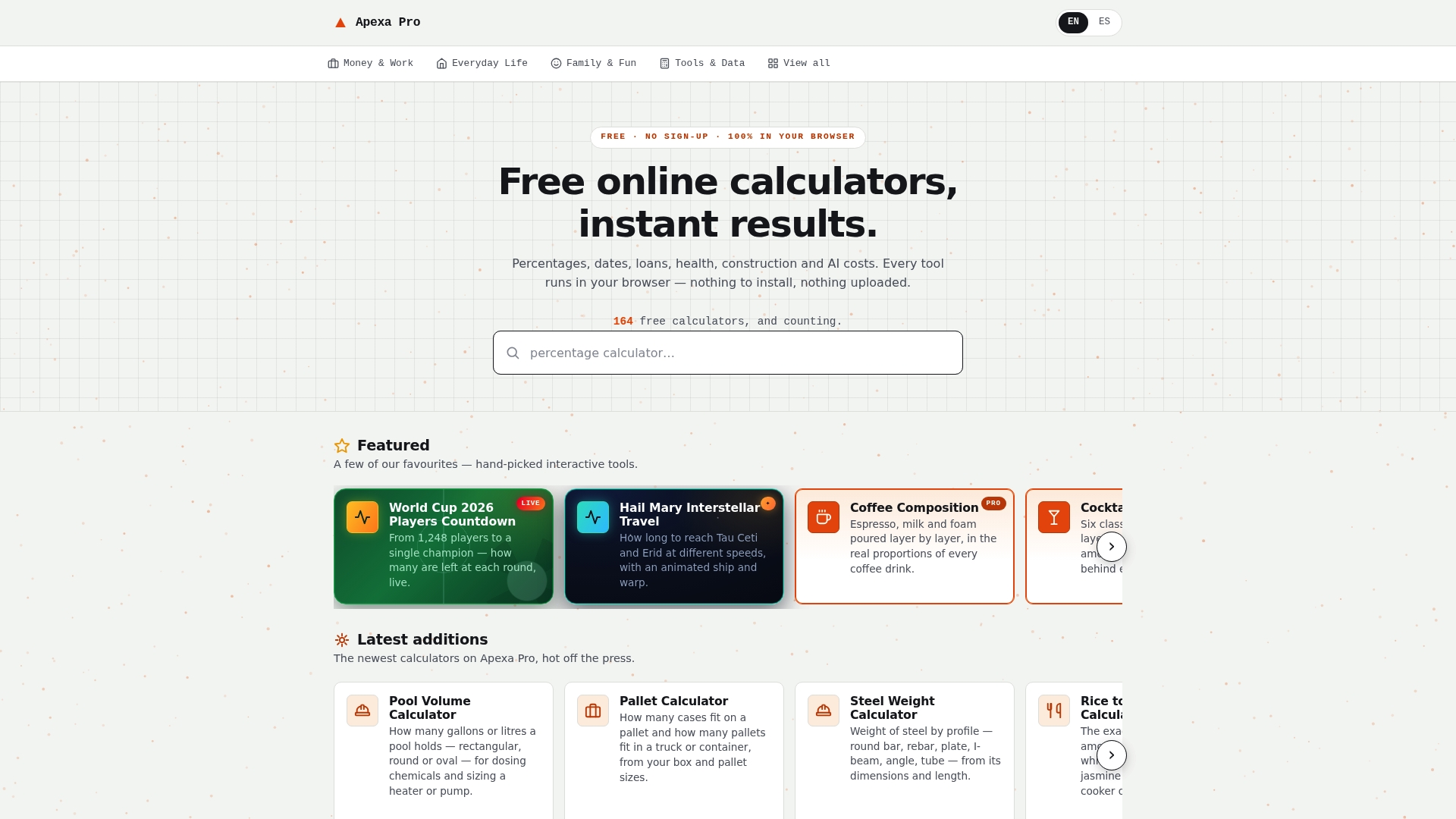
The tool is fully bilingual in English and Spanish, which makes it useful for classrooms, kitchens, and job sites where both languages are in play. Printable chart output and copy-ready values mean you can take the results offline just as easily. For students, home cooks, and anyone working from plans or recipes in a different measurement system, it is the practical next step after reading this guide. Visit Apexapro and run your first conversion now.
Sources
The following references were used for exact conversion factors, tables, and contextual explanations throughout this article.
- NIST Guide to the SI — Appendix B: Conversion factors
- Conversion Tables for Measures and Weights (U.S. Census)
- Metric versus Imperial converter | Britannica