There's no single cups-to-grams conversion because cups measure volume and grams measure weight, and every ingredient has its own density. A cup of water weighs far more than a cup of oats, so the number you need depends entirely on what's going into the bowl.
Here are the 1-cup values home bakers reach for most:
- Water: approximately the weight of a US cup volume of water
- All-purpose flour: a range depending on measuring method, typically close to but varying around the weight of a US cup volume of flour
- Granulated sugar: approximately the weight of a US cup volume of granulated sugar
- Butter: approximately the weight of a US cup volume of butter
One more variable worth knowing: a US cup is 236.588 mL), commonly rounded to 237 mL, while a metric cup used in Australia and parts of Europe is 250 mL.
Key Takeaways
Grams give bakers a reproducible measurement that cups can't match, since a cup's weight depends entirely on the ingredient's density and how it's handled.
| Point | Details |
|---|---|
| No universal conversion | Grams per cup depend on density; water, flour, and sugar each convert differently. |
| Method changes the number | Spooned flour (120 g/cup) weighs less than scooped flour (125 g/cup) for the same cup. |
| Cup standards differ | A US cup (236.6 mL) and metric cup (250 mL) shift gram values by about 5%. |
| Weigh for critical recipes | Use grams for bread and cake; cups are fine for casual stovetop cooking. |
| Use a converter for accuracy | Apexapro's free cups-to-grams tool handles fractions and US/metric cup toggles instantly. |
Table of Contents
- Cups to Grams Conversion Chart for Common Ingredients
- Why Do Bakers Prefer Weighing Over Measuring by Cups?
- How Do You Convert Cups to Grams Yourself?
- What Measuring Habits Change a Cup's Weight?
- How Does Apexapro's Cups-to-Grams Converter Work?
- Where Do These Conversion Numbers Come From?
- How Much Does Ingredient Density Really Vary?
- How Do You Measure Ingredients With No Standard Conversion?
- When Should You Weigh Versus Measure by Cups?
- Get Instant Conversions With Apexapro's Free Converter
- Sources
Cups to Grams Conversion Chart for Common Ingredients
Once you know the 1-cup value for an ingredient, every fraction scales from it. The chart below covers the ingredients home bakers convert most often, with ounces included for readers who split the difference between systems.
A few notes worth flagging before you start weighing:
- Brown sugar must be firmly packed into the cup for these approximate weights, following common convention.
- Flour swings the most of any dry ingredient depending on whether you spoon it in or scoop straight from the bag, which the Allrecipes conversion guide documents with matching fractional and ounce values.
- Honey and sticky liquids are best measured by weight since volume measurements can be inaccurate due to residue clinging to cups.
- These figures assume a US cup (236.588 mL); metric-cup recipes will run about 5% higher across the board.
Why Do Bakers Prefer Weighing Over Measuring by Cups?
Weighing removes the human variability that scooping, packing, and fluffing introduce. A cup of flour scooped straight from the bag can weigh 10% to 40% more than the same cup spooned in and leveled off, and that swing changes the flour-to-liquid ratio enough to turn a tender crumb into a dense one.
Professional bakers lean on scales because grams are reproducible in a way volume never is, a point Bake With Yen makes clearly when comparing the two systems. Switching to weight gets you:
- A consistent crumb from batch to batch
- Predictable rise, since hydration ratios stay fixed
- Recipes you can scale up or down without guessing
Pro Tip: If a recipe only lists cups, weigh your flour once using your usual scooping habit, then write that gram figure next to the recipe. You'll get the same result every time after that, even if you forget the original method.
How Do You Convert Cups to Grams Yourself?
The formula is simple: grams = cups × grams per cup for that ingredient, or if you're working from raw density data, grams = volume in mL × density in g/mL.
Here's a worked example using all-purpose flour, spooned and leveled:
- Confirm your method. Spooned and leveled flour weighs about 120 g per cup.
- Multiply by your fraction: 2/3 cup × 120 g = 80 g.
- Round sensibly to the nearest gram, typically within 1 to 5 g.
Two mistakes trip up most home cooks. The first is mixing up cup standards, since a US cup and a metric cup differ by about 5.7%, according to reference data on cup measurements. The second is grabbing a grams-per-cup figure from one source and a cup-size assumption from another. Pick your method, state it, and stay consistent across a recipe.
What Measuring Habits Change a Cup's Weight?
Small technique choices move the scale more than most cooks expect. Follow these to keep your conversions accurate:
- Spoon flour into the cup and level with a knife. Don't scoop directly from the bag; it compacts flour and inflates the weight.
- Pack brown sugar firmly until it holds the cup's shape when turned out.
- Measure butter by weight or by the markings on the wrapper, not by eyeballing the cup line.
- Weigh honey and other sticky liquids in a tared container rather than a measuring cup, since residue left behind skews the volume reading.
Temperature and humidity matter too. Flour absorbs moisture from humid air and packs differently in a cold kitchen versus a warm one, which is part of why the same recipe can behave differently across seasons. Store dry ingredients in sealed containers to limit that drift.
Pro Tip: Calibrate a digital kitchen scale with a known weight, like three US quarters (about 17 g), before a big baking session. It takes ten seconds and catches drift before it ruins a batch.
How Does Apexapro's Cups-to-Grams Converter Work?
Apexapro's interactive cups-to-grams converter handles the density lookup for you, covering ingredient-specific weights, fraction scaling, and both US and metric cup standards in one screen.
Using it takes three steps:
- Pick your ingredient from the list
- Choose your cup standard (US or metric)
- Enter the amount, including fractions, and get grams and ounces instantly
It's free and runs directly in your browser at Apexapro, with no sign-up required.
Where Do These Conversion Numbers Come From?
The gram values in this guide draw from a mix of measurement standards and baking references, not a single source, because no single source is complete on its own.
- National measurement guidance from NIST on the relationship between volume and mass
- Food density data from the FAO
- Baking-focused conversion charts like Allrecipes and Cups & Grams
Published gram-per-cup values for the same ingredient can differ by 10% to 15% across sources, mostly because of how each one handles scooping, packing, and rounding.
Where sources disagreed, this guide favored the spoon-and-level convention for dry ingredients, since it's the more repeatable technique for home cooks to follow.
How Much Does Ingredient Density Really Vary?
Density is the reason a single "cups to grams" number doesn't exist, and it varies more than most recipes let on. Granulated sugar sits at a fairly stable 200 g per cup because its crystal size is consistent, but flour can range from 120 g to 135 g per cup depending on brand, grind, and how it settles during shipping. Whole wheat flour packs denser than all-purpose because of the bran, often adding another 5 to 10 g per cup.
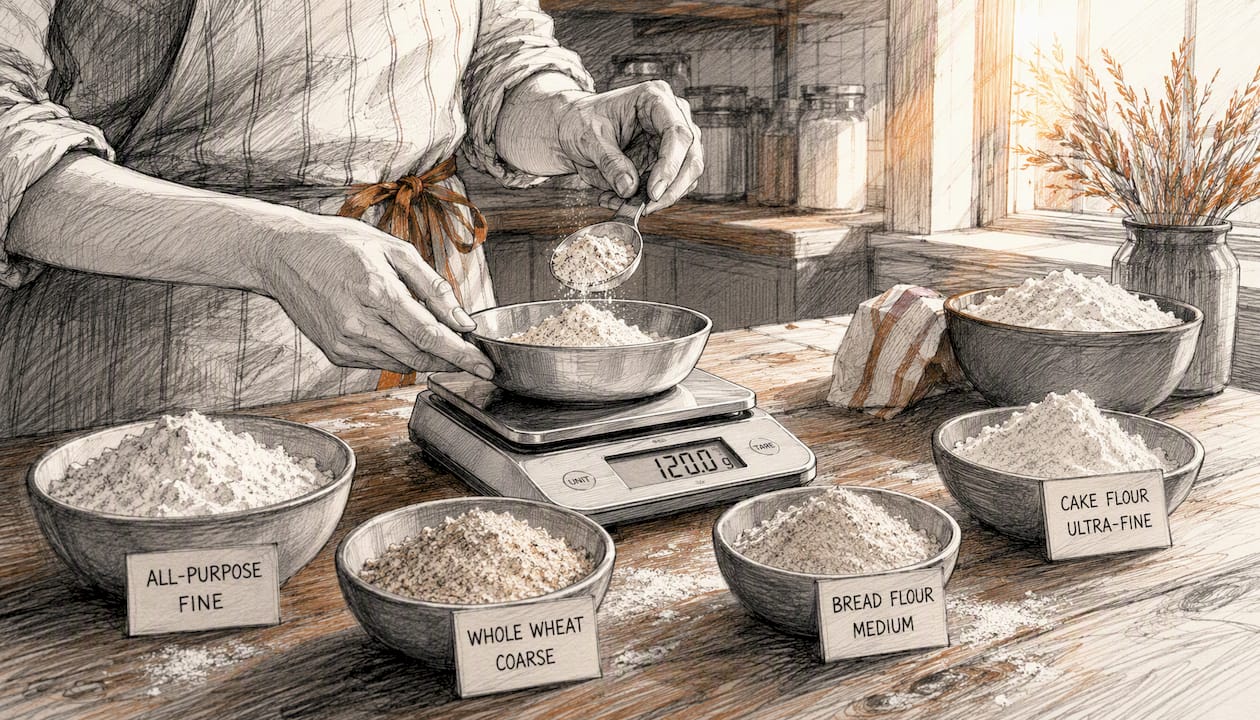
Fat-based ingredients complicate things further. Butter is dense and uniform at 227 g per cup, but shortening and coconut oil shift with temperature: solid coconut oil measures differently than the same oil melted into a cup. Nuts add another layer entirely, since chopped walnuts trap more air than whole almonds, so a cup of one can weigh noticeably less than a cup of the other even though both are "nuts" on a recipe card.
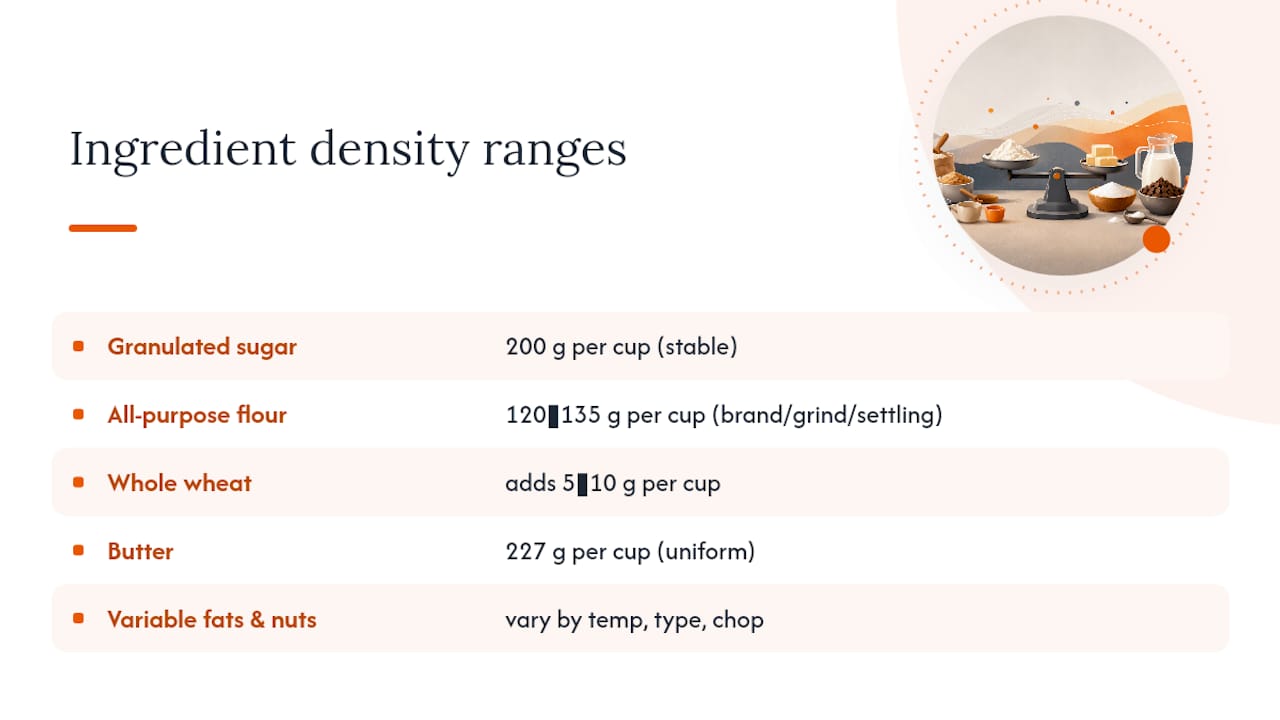
This is why conversion charts, including the one above, are estimates built from common reference points rather than laws of physics. A 10% to 15% spread between sources is normal and expected. For everyday cooking, that spread rarely matters. For laminated dough, macarons, or anything with a tight hydration ratio, it's worth weighing the specific brand you use once and keeping that number for future batches.
How Do You Measure Ingredients With No Standard Conversion?
Some ingredients don't show up on any chart: shredded coconut, mini chocolate chips, freeze-dried fruit, specialty flours like teff or amaranth. When you hit one of these, a kitchen scale is the fastest way forward.
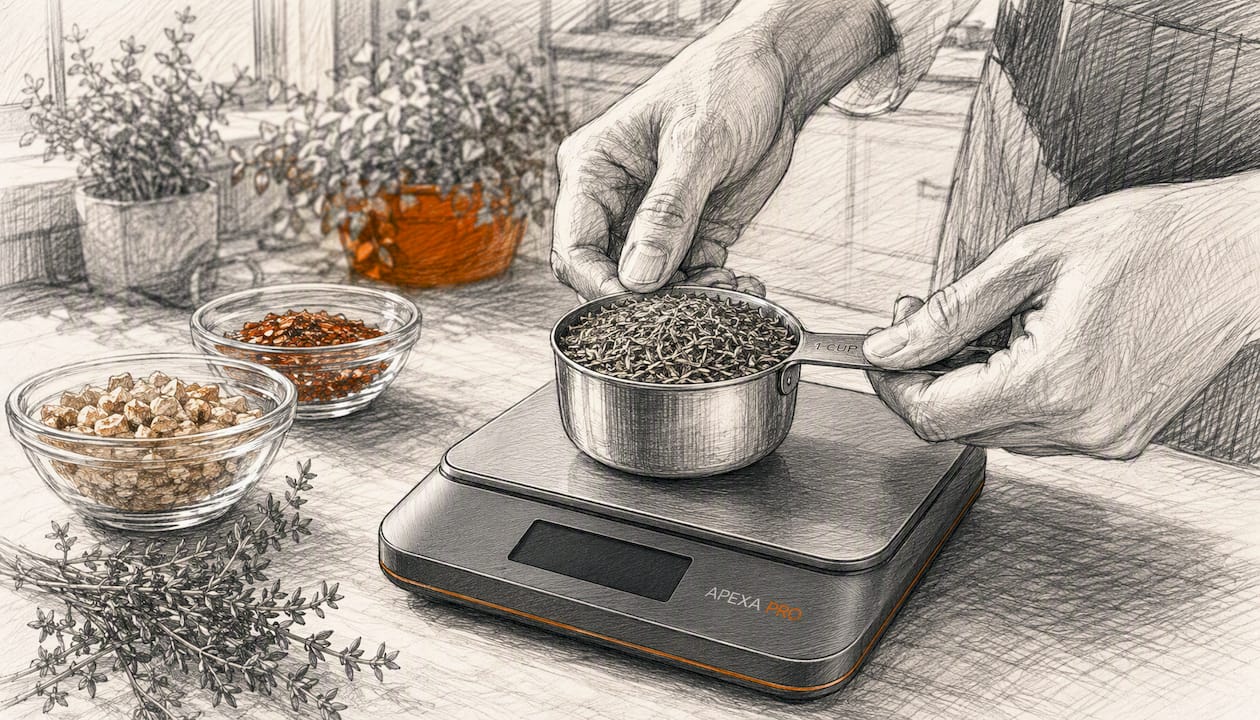
Weigh a known volume once using your kitchen scale, and you've solved the problem for good. Measure a level cup of the ingredient, weigh it, and write the gram figure directly on the package or in your recipe notes. That single data point becomes your personal reference for every future recipe calling for that ingredient in cups.
For ingredients that vary by brand, like almond flour or gluten-free blends, weigh the specific brand you buy rather than trusting a generic online figure, since particle size and moisture content differ enough between manufacturers to matter. If you're substituting one uncommon ingredient for another in a recipe, matching them by weight rather than volume keeps the substitution honest, since two ingredients that fill a cup the same way can still weigh very differently.
When in doubt and no scale is handy, lean on texture cues from the recipe itself, like "spreadable" or "holds a stiff peak," as a backup check against your measurement.
When Should You Weigh Versus Measure by Cups?
Weigh your ingredients for anything where structure depends on precise ratios: breads, cakes, and pastry all reward the extra step. For simple stovetop cooking, soups, or dishes where a splash more or less won't hurt, cups work fine.
Get Instant Conversions With Apexapro's Free Converter
Skip the mental math and let Apexapro's browser-based cups-to-grams converter do the density lookup for you, right when you're standing in the kitchen mid-recipe.
It handles the details that trip up manual conversions: fraction scaling for oddball measurements like 2/3 cup, and a toggle between US and metric cup standards so you're never guessing which system a recipe used. There's no sign-up and no download; it runs instantly in your browser. If you're also juggling rice-to-liquid ratios or oven temperature conversions in the same recipe, Apexapro's rice-to-water ratio guide and oven temperature converter cover those too. Open the Apexapro and get your exact gram figure before you start mixing.